Problem
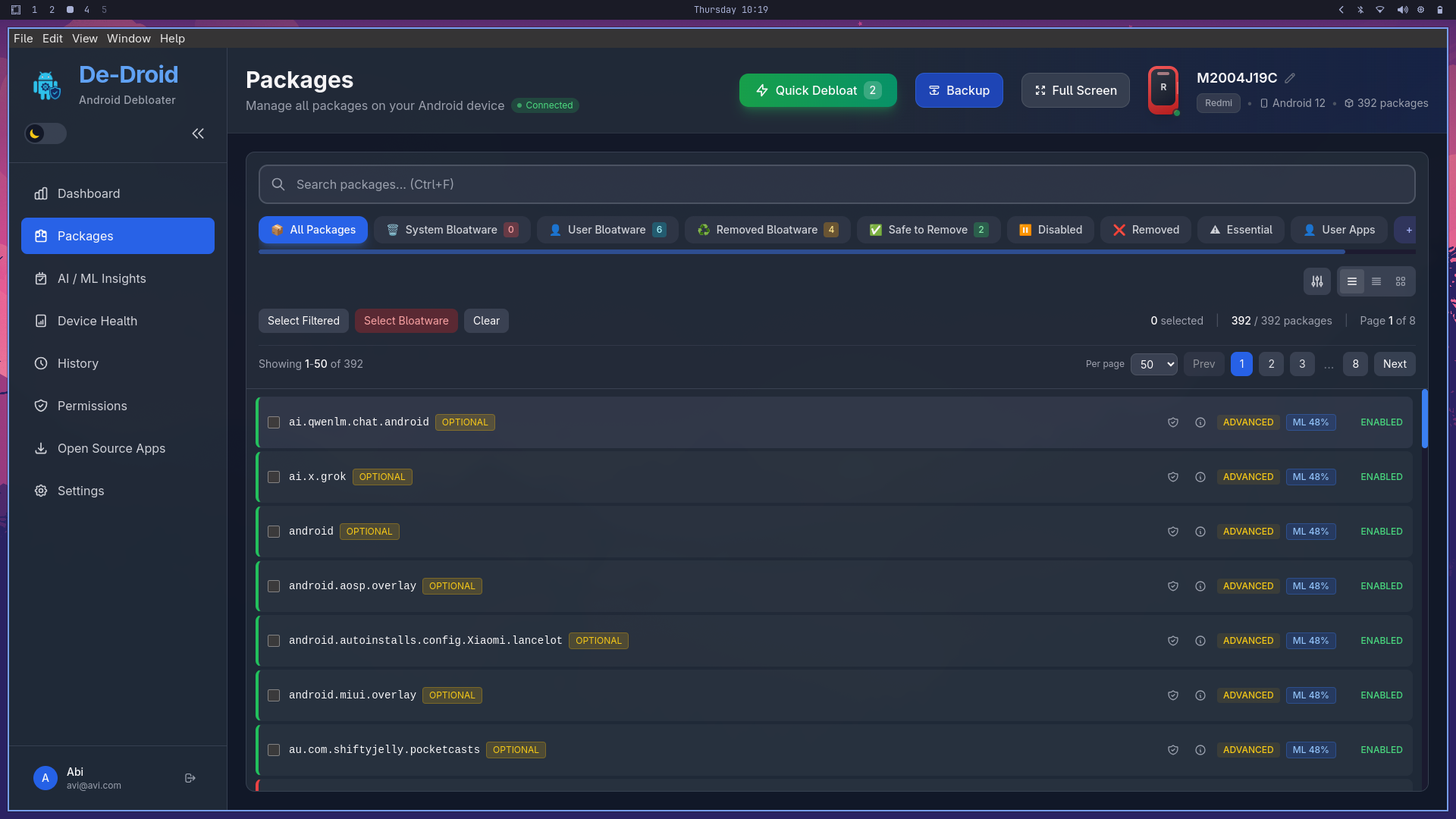
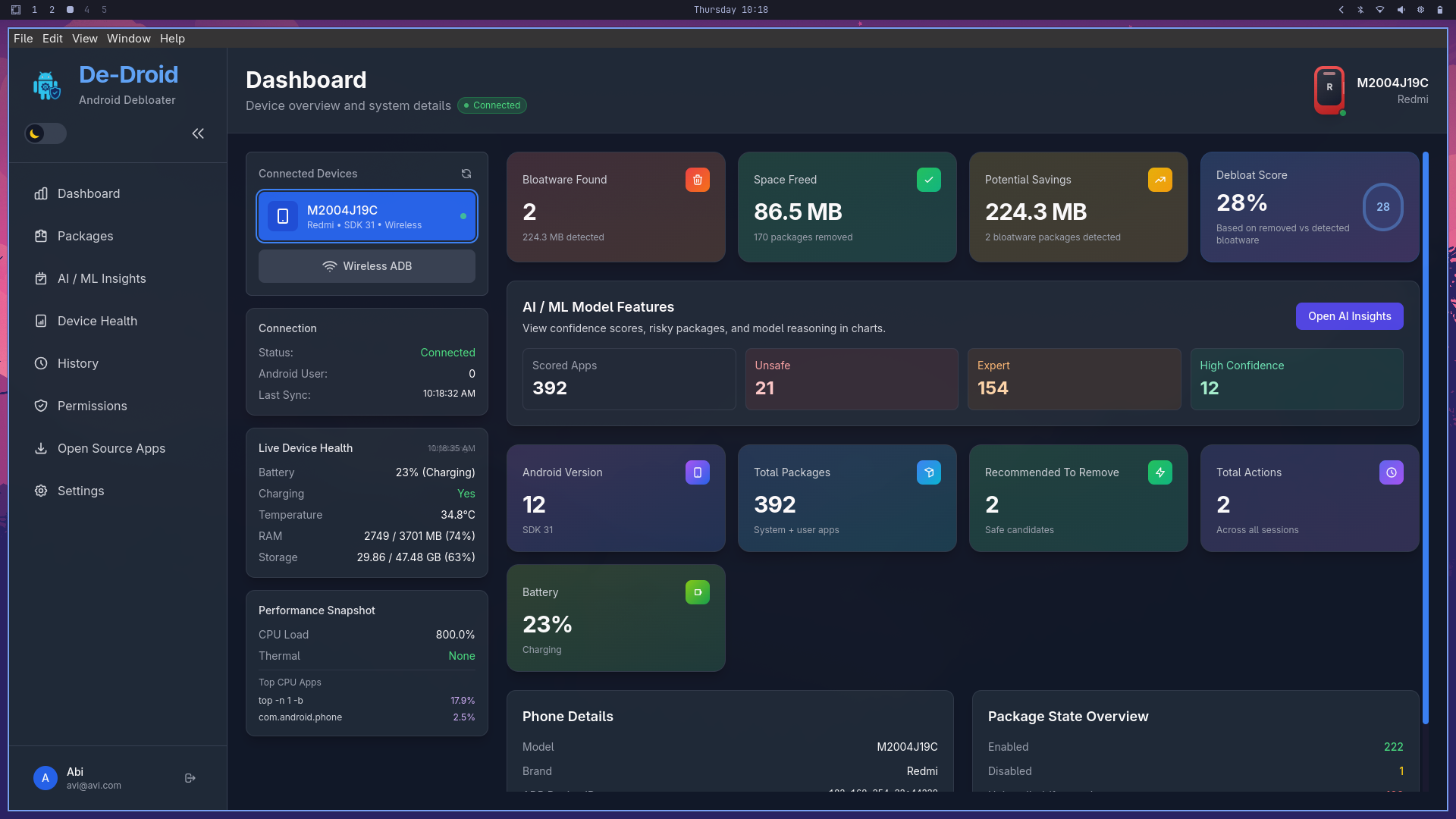
Android package names are difficult to interpret, and managing them through terminal commands makes it easy to lose track of what changed. De-Droid puts package inspection and common ADB actions into a desktop interface for non-rooted devices.
Architecture
The React/TypeScript interface communicates with Electron’s main process through IPC handlers. The main process executes ADB commands locally. JSON metadata and SQLite storage support package information, settings, action history and saved package-state snapshots.
The core package actions run on the local machine. Optional integrations exist, so local-first does not mean that every feature is offline.
Package workflows
The application supports inspecting packages, searching and filtering the list, uninstalling for a device user, disabling, enabling and restoring packages. Batch removal keeps track of individual results.
Risk labels and guarded actions help users review what they are about to change. These checks support decision-making; they do not guarantee that every change is safe on every Android device.
History and recovery
Local history records actions and their results. Saved snapshots record package names and states, and comparison identifies missing packages, new packages and state changes. These are package-state records, not complete backups of application data or the device.
Restore and history-based rollback workflows use the available ADB operations. What can be restored depends on the package and device state.
Optional experimentation
The repository also includes an optional FastAPI service for ML-assisted package scoring. It is a secondary experiment alongside the desktop and device-management work.
Engineering takeaway
A device tool needs more than a button that runs a command: users need context before an action, a clear result afterwards and a way to understand what changed.
Source and interface